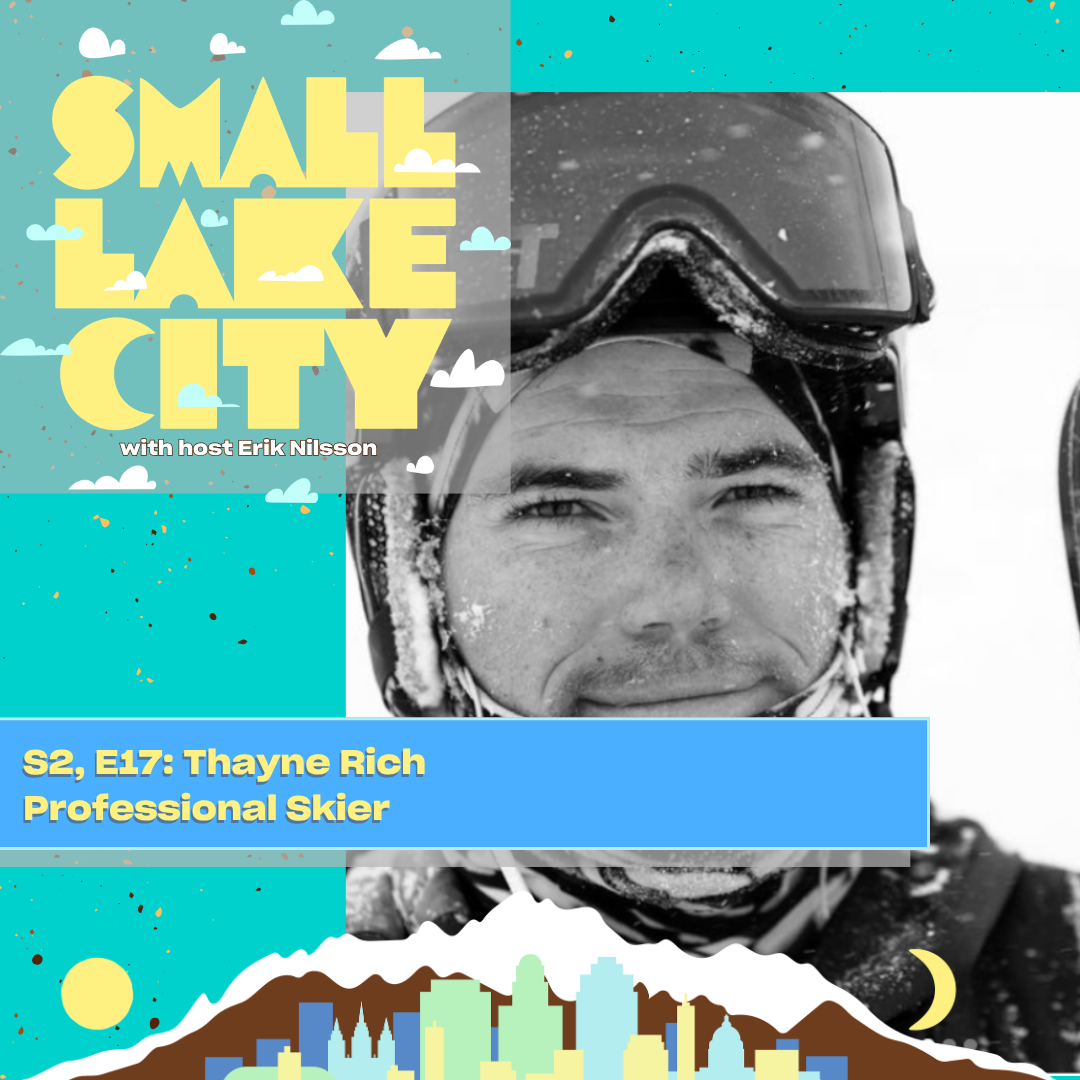
Growing up skiing in Salt Lake City creates a specific kind of confidence: you learn early, you learn fast, and you learn because your friends and siblings are already doing it. Thayne Rich and the host trace that pipeline from backyard trampolines and Bonneville Golf Course jumps to the bigger DIY gap-jump era where kids got towed in by cars, rebuilt features after they were torn down, and somehow avoided serious consequences. It is a snapshot of Utah ski culture before social media, when legends like Flagstaff gaps felt both reachable and terrifying, and when a “good to go” from an older brother was all the risk assessment you needed.
That same brother-energy becomes Thayne’s training plan. He talks about progressing from fearless cliff hits to the huge public-park jumps at Park City, then shifting toward Alta’s playful, natural freestyle terrain. The conversation highlights a useful truth for aspiring skiers and snowboarders: the mountain you choose shapes your style. Park jumps teach precision, speed control, and repetition. Backcountry features and in-bounds natural hits teach adaptability, comfort with imperfect takeoffs, and reading terrain under pressure. Those skills later translate directly into filming, where you might only get a few tries on a feature and conditions never match the blueprint.
Thayne’s turning point is not a single viral clip, but obsession-level consistency. He describes sprinting home after lunch, hauling gear onto multiple buses, and spending two and a half hours commuting just to ski for 45 minutes. That grind, plus strong grades and supportive parents, opens doors: early sponsorships, community validation from respected Utah pros, and the first real filming opportunities. For anyone chasing action sports goals, it is a reminder that “networking” often looks like showing up relentlessly, being prepared, and being good to work with when a crew needs one more athlete.
The travel stories make the stakes real. A last-minute invite to Argentina leads to a 40-hour travel chain, a dead computer, no cell service, and hours waiting at a bus station in the middle of nowhere. Later, Japan becomes a maze of train transfers while hauling ski bags, relying on strangers, and racing closed ticket counters. These moments underline why ski filmmaking and backcountry trips demand more than athletic ability: you need calm decision-making, teamwork, and the humility to accept help. Thayne also explains why heli skiing is “more scary than fun” until the day ends, because scale, consequences, and limited attempts all spike the pressure.
A unique angle is how Thayne’s career expands from athlete to builder. With Forefront Skis, he works his way into ski construction, prototype testing, and eventually a pro model that starts as a rogue experiment built from leftover cores. The result earns real product validation, including industry testing recognition, and shows how design choices like width, length, twin tips, and rocker profiles connect to a skier’s preferences and terrain. Finally, he talks about balancing identity and longevity: stepping back from making skiing his whole personality, building a life as an arborist, and still keeping Alta at the center. It is a grounded blueprint for sustaining passion, building a career in the ski industry, and growing up without letting the dream disappear.
Listen to full episode :