S2, E21: More Than Dinosaurs, Inside Utah's Most Fascinating Museum with Jason Cryan
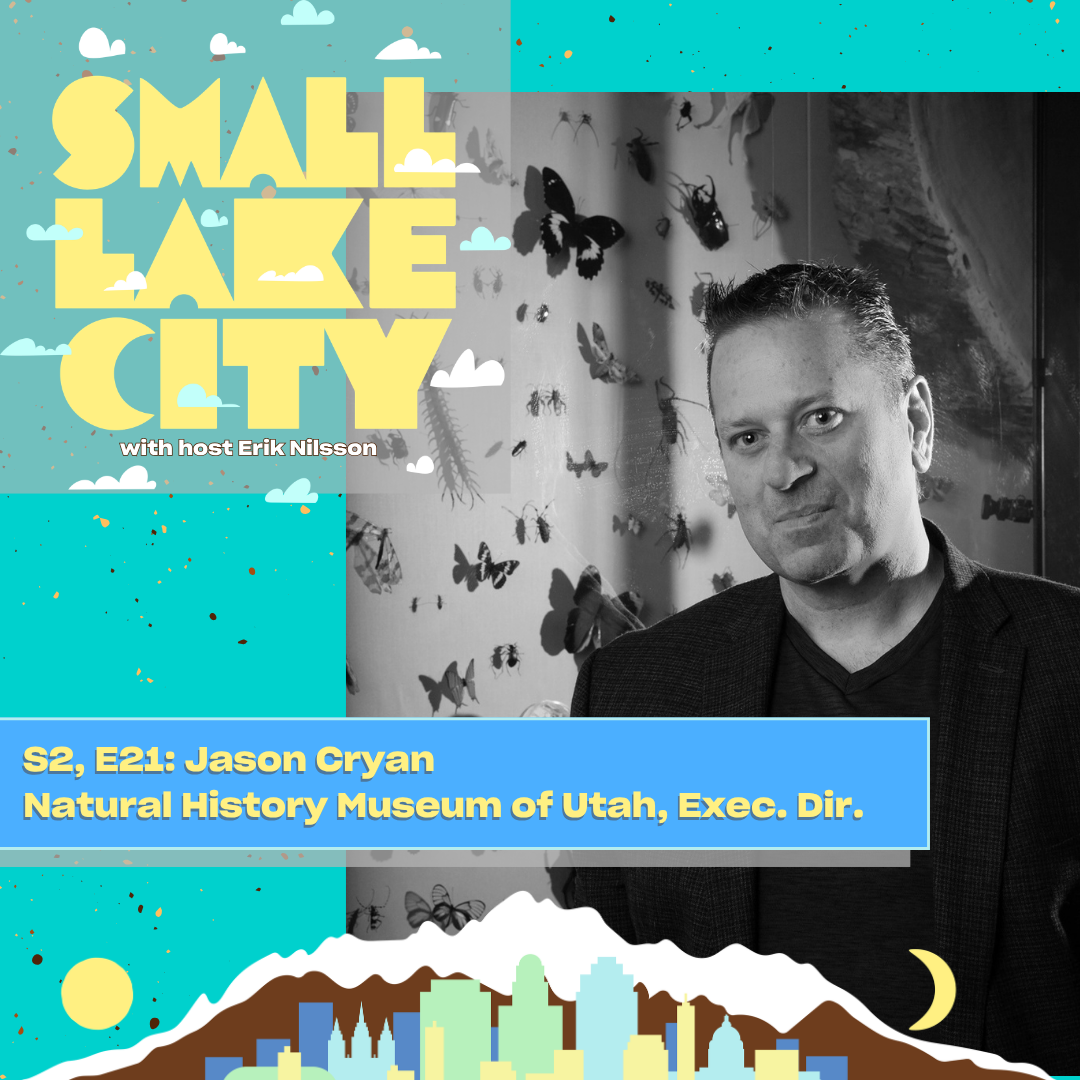
The Natural History Museum of Utah in Salt Lake City looks like a destination, but it also operates like a working research institution. In our conversation with director Jason Cryan, we trace how a “true science museum” earns that name through real collections, fieldwork, and public learning. The museum holds more than two million specimens and objects, which power everything from paleontology and archaeology to biodiversity research and conservation questions. If you’re searching for Utah museums that combine family activities with authentic science, the NHMU is a clear example of how exhibitions can be built on data, not just display.
Jason’s path starts far from Utah, growing up in Burlington, Vermont with an Earth Day era environmental ethic and a childhood spent outdoors. The pivotal moment is not a single obsession with dinosaurs or insects, but a mentor who makes the ordinary feel magical: an entomologist who can read forests like a book, from insects to footprints to plants. That experience turns science into a way of seeing, and it pushes Jason from a pre-med track toward zoology, entomology, and evolutionary biology. It’s also a reminder that the scientific method is practical life training: observe, test, revise, and stay curious.
Graduate school sharpens that curiosity into tools. Jason explains systematics as the engine behind biodiversity discovery, combining taxonomy with phylogenetics to answer the big questions: what species exist, where they live, how they are related, and why. He moves from anatomy-based evolutionary trees to molecular phylogenetics and targeted DNA sequencing, then applies that work to tropical insects across Costa Rica and beyond. The deeper takeaway is that the “why” matters as much as the “what,” and that good science starts with simple questions asked carefully, not with a quick search result.
A major shift comes when museum work replaces the traditional academic pathway. After a postdoc at BYU, Jason is recruited to the New York State Museum to build a genetics lab, launching a career as a museum-based scientist. Grants and global fieldwork follow, but so do administrative realities, public accountability, and the desire to “move the needle” with larger impact. Leadership becomes a way to advocate for teams of researchers and expand informal science education. That arc ultimately leads him to the North Carolina Museum of Natural Sciences, then back to Utah to run the Natural History Museum of Utah.
At NHMU, the public-facing side is designed to connect Utah’s place-based story to global science. Permanent galleries like the dinosaur timeline leverage Utah’s world-class paleontology, while the Great Salt Lake gallery links ecology and geochemistry to an actual view of the lake outside the window. Rotating special exhibitions keep return visits high and help convert tickets into memberships, with recent highlights ranging from cultural history to wildlife. “Bug World,” built with Te Papa and Weta Workshop, flips the usual museum script by making the experience immersive and visceral rather than label-heavy. The museum also supports school field trips at scale, bringing tens of thousands of kids through the doors free of charge via Utah’s informal science education partnerships.
Behind the scenes, research is the throughline. Jason points to projects like work on the Four Corners Potato in archaeological contexts, new dinosaur finds in southern Utah, and field research that connects continents and deep time. The most inspiring message is that discovery is not finished and it’s not always far away: a colleague finds a new ant species in a Salt Lake City backyard. Museums preserve the evidence, train the next generation, and keep wonder alive, not as nostalgia, but as a practical ingredient for learning and leadership.
Listen to full episode :