Bonus: Jeff Miller, Mark Miller Subaru
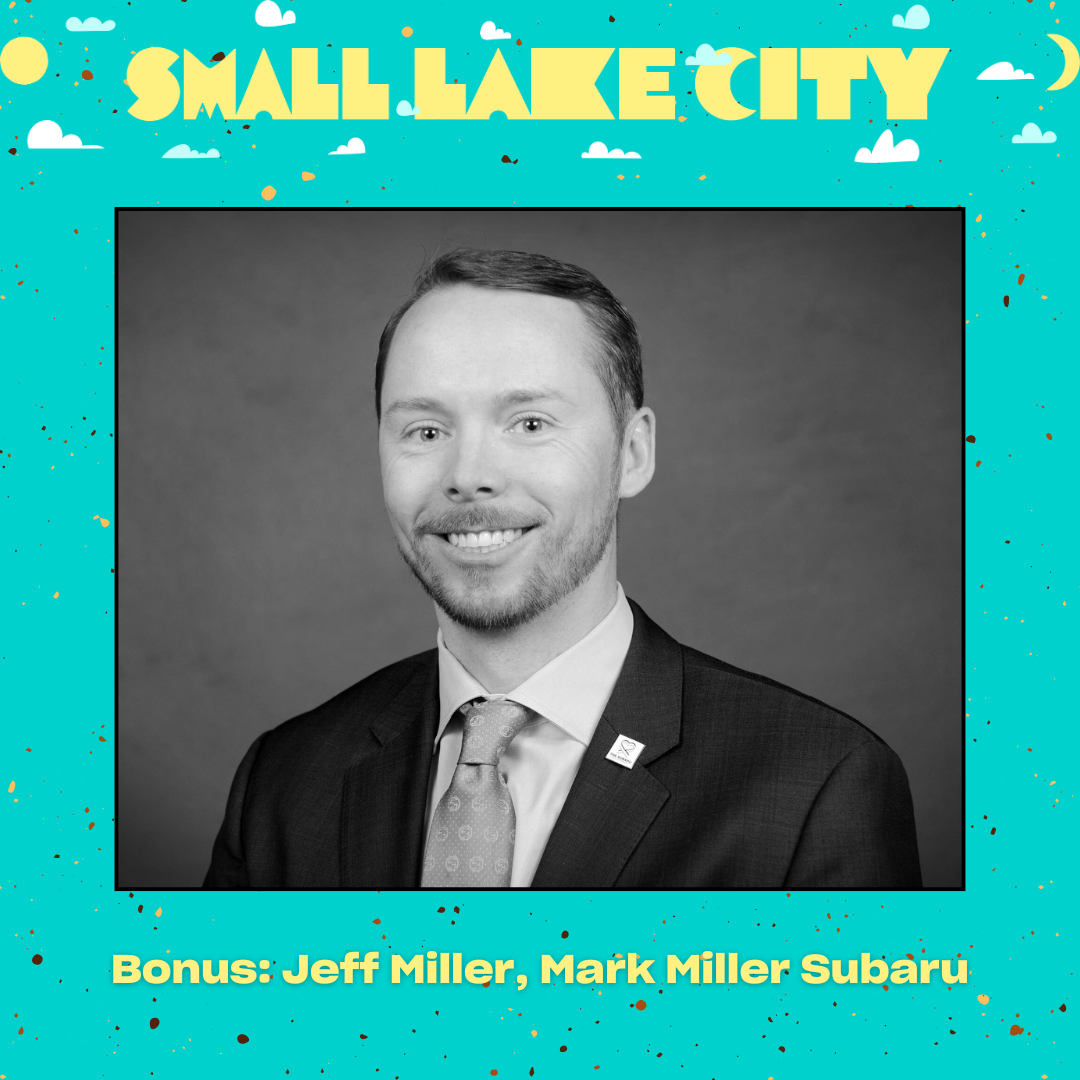
The story begins with a surprise: a fourth-generation family dealership in Salt Lake City built its identity on a coin flip. In 1971, faced with a choice between two obscure Japanese brands, the Millers flipped a quarter and landed on Subaru. For 25 years, it looked like the wrong bet as Honda soared and Subaru stalled. Then the Outback arrived in 1996 and everything turned. That turning point didn’t just lift sales; it aligned a brand with a philosophy: community over hype, trust over tactics, and the belief that a business in a city should strengthen the city. It’s a rare mix of origin story and operating system, the kind that explains why the Miller name still matters on State Street and why Subaru feels like the unofficial car of Utah.
What sets this dealership apart is not nostalgia; it’s design. In 2014, they did what most dealers fear: they eliminated negotiation. The “Promise Price” model posts the best price up front, and product specialists earn the same whether you buy a $20,000 Crosstrek or a $50,000 Ascent. The incentives are tuned to the customer, not the desk. Shoppers see payments on-screen and choose without the theater of back-and-forth. The result is speed and clarity: deals can finish in 30 to 60 minutes, conversion rates rise from the industry’s 25 percent to about 40–45 percent, and employee behavior shifts from pushing metal to solving needs. In a market where fewer than one in five people enjoy haggling, one-price selling is not just humane—it’s competitive.
Service and access follow the same logic: meet people where they are. Some buyers want a Tesla-like online checkout and home delivery. Others want a quick, guided showroom visit. On the service side, mobile technicians will soon handle routine care in driveways—particularly for Park City owners who lose hours to canyon traffic. This is the quiet revolution of retail auto: friction is a cost center, and convenience is loyalty. In a city where collaboration beats sharp elbows, small operational upgrades—transparent pricing, simple paperwork, at-home service—compound into outsized trust. That trust saves time, shrinks anxiety, and turns repeat leases into 45-minute errands instead of four-hour grinds.
Then there’s the engine behind the brand: community impact. Well before corporate campaigns took off, the Millers were donating per-car proceeds to local causes, learning to focus on a few partners for real depth instead of dozens for shallow reach. Subaru’s Share the Love event amplified that model. From November 20 to January 2, each sale generates a $250 Subaru donation to charity; if customers choose a local partner, the dealership matches it with another $250, plus $5 from every oil change. Those dollars stay visible and tangible. A shelter expands a wing. A youth program grows enrollment. Partners like Girls on the Run and USARA don’t just receive checks; they set up in showrooms, reach new donors, and collaborate with other grantees. The brand becomes a bridge, not just a logo.
Salt Lake City’s dealership scene is uniquely family-led, and that continuity shapes the market. With strong local groups historically buying any store that came up for sale, public chains mostly stayed out, preserving a culture where names matter and neighbors notice. That local gravity explains Subaru’s dominance in specific segments—Crosstrek in small SUVs, Outback for mountain life—even if the brand lacks trucks and minivans. Utah lands among Subaru’s top markets alongside Seattle, Portland, and New England, where all-wheel drive and four-season utility are more than features; they’re a way of life. Add in national auto cycles—16 million new cars sold in a down year while 18 million are scrapped—and you see why transparent, low-friction models win when pent-up demand returns.
The bigger idea is simple and powerful: adapt or fade. Direct and one-price competitors trained customers to expect ease. The Millers responded without losing the local heartbeat—clear pricing, non-commission guidance, flexible buying paths, and measurable philanthropy. That formula isn’t a marketing gimmick; it’s a strategic moat. When a dealership proves that trust shortens sales, reduces complaints, and lifts repeat rates, it stops fighting every customer and starts serving the right ones. That’s how a coin flip matured into a playbook: pick integrity over games, pick community over noise, and build a store people return to on purpose.
Listen to full episode :